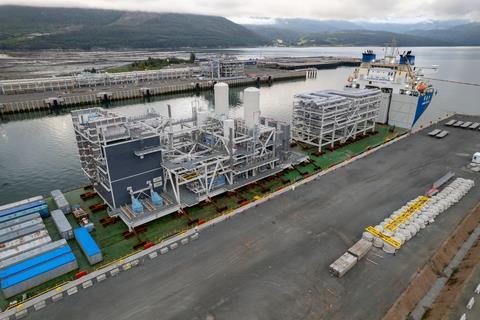
Fluor Reaches Milestone in LNG Canada Project with Module Fabrication Completion
Posted 27/07/2023 12:56
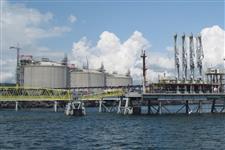
Fluor Corporation announced a significant milestone in the LNG Canada project in Kitimat, British Columbia, Canada, with the completion of the module fabrication program. With the arrival of the last module by ship from Zhuhai, China, Fluor marked the conclusion of a critical phase in constructing a large terminal for liquefying, storing, and loading liquefied natural gas (LNG) for export to global markets.
Jim Breuer, group president of Fluor's Energy Solutions business, emphasized the company's dedication to delivering complex energy and chemicals projects worldwide. He highlighted the importance of liquefied natural gas in the energy transition as it displaces higher carbon energy sources. Fluor takes pride in building Canada's first large LNG export facility, which will contribute to global energy security.
Fluor, in partnership with JGC Corporation, is responsible for various aspects of the LNG Canada project, including engineering, procurement, fabrication, and delivery of modules, as well as the construction of infrastructure and utilities, marine structures, and LNG storage tanks.
The module fabrication program involved receiving a total of 215 modules of different sizes, with the first major module received in March 2022. The final module, measuring 145 feet tall and weighing over 5,000 tons, arrived at the LNG Canada project site recently, completing the module fabrication phase.
Pierre Bechelany, president of Fluor's LNG business, expressed pride in achieving this significant milestone and highlighted the success of the innovative modular construction approach. This method allowed Fluor to advance construction activities on-site while working with local communities, skilled local workers, and minimizing environmental impacts.
LNG Canada is a joint venture involving Shell, Petronas, PetroChina, Mitsubishi Corporation, and Korea Gas Corporation. The project will initially produce 14 million tons of LNG per year, with the first shipment scheduled for the mid-decade. The completion of the module fabrication program marks a crucial step towards achieving this ambitious target and meeting the global demand for clean energy.