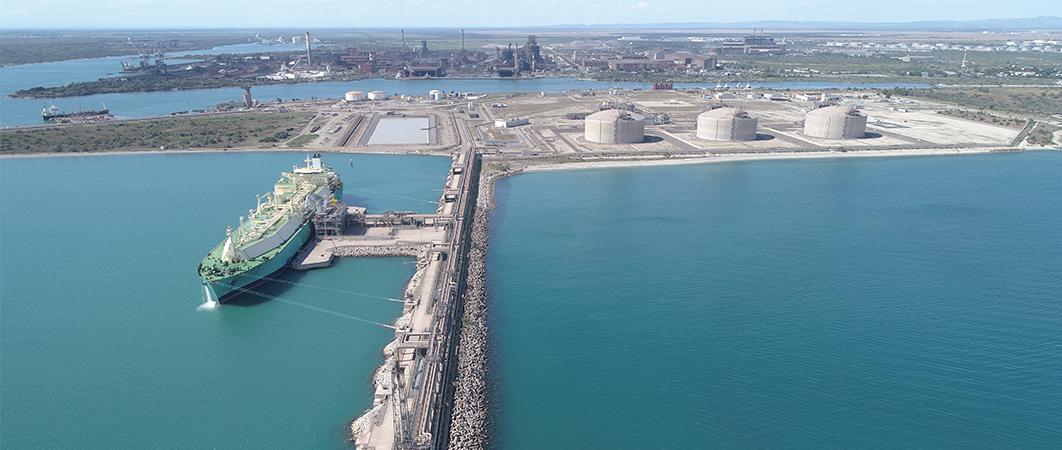
Falling Gas Demand Questions the Need for France's LNG Buildout, Warns IEEFA
Posted 10/10/2023 13:15
New research by the Institute for Energy Economics and Financial Analysis (IEEFA) titled "France's LNG Paradox" highlights concerns about France's increasing investments in liquefied natural gas (LNG) infrastructure as demand for gas falls and existing terminals experience declining utilization rates.
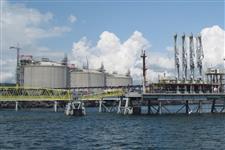
IEEFA's research indicates that the average utilization rate of France's operational LNG import terminals stood at 60% between January and August 2023, down from 74% in the previous year. This decline raises doubts about the necessity of a new floating storage regasification unit (FSRU) that recently arrived at the port of Le Havre.
The Le Havre FSRU, chartered by TotalEnergies, has a regasification capacity of five billion cubic meters and is expected to be operational for the next five years. However, the arrival of the unit in French waters in September 2023 sparked dissatisfaction among environmental activists, and data from Disclose and Greenpeace France suggested that the terminal might be unnecessary for ensuring energy independence in France and neighboring European countries, even during a cold winter.
Ana Maria Jaller-Makarewicz, the author of the report and an Energy Analyst at IEEFA, emphasized that gas and LNG infrastructure could be at risk due to declining demand and volatile prices. If demand continues to decrease, investments in gas infrastructure could fail to enhance energy supply security and may end up being underutilized.
Despite France's commitment to invest in projects that reduce Russian gas dependency and improve European energy supply security, IEEFA pointed out that Russian gas is still finding alternative routes to reach French ports in the form of LNG.
IEEFA also noted that energy company Engie has a 23-year deal signed in 2015 to import one million tons of LNG annually from Russia's Yamal LNG project for transshipment at the Montoir-de-Bretagne terminal on France's west coast. Transshipments of Yamal LNG at Montoir-de-Bretagne surged by 150% year over year in 2022, and this trend is expected to continue in 2023.
According to Kpler, the United States was the top exporter of LNG to France in 2022, followed by Russia, Algeria, Qatar, and Nigeria.
In summary, IEEFA's research underscores concerns that France's investment in expanding LNG infrastructure may not align with declining gas demand, raising questions about the necessity and utilization of new terminals and FSRUs.